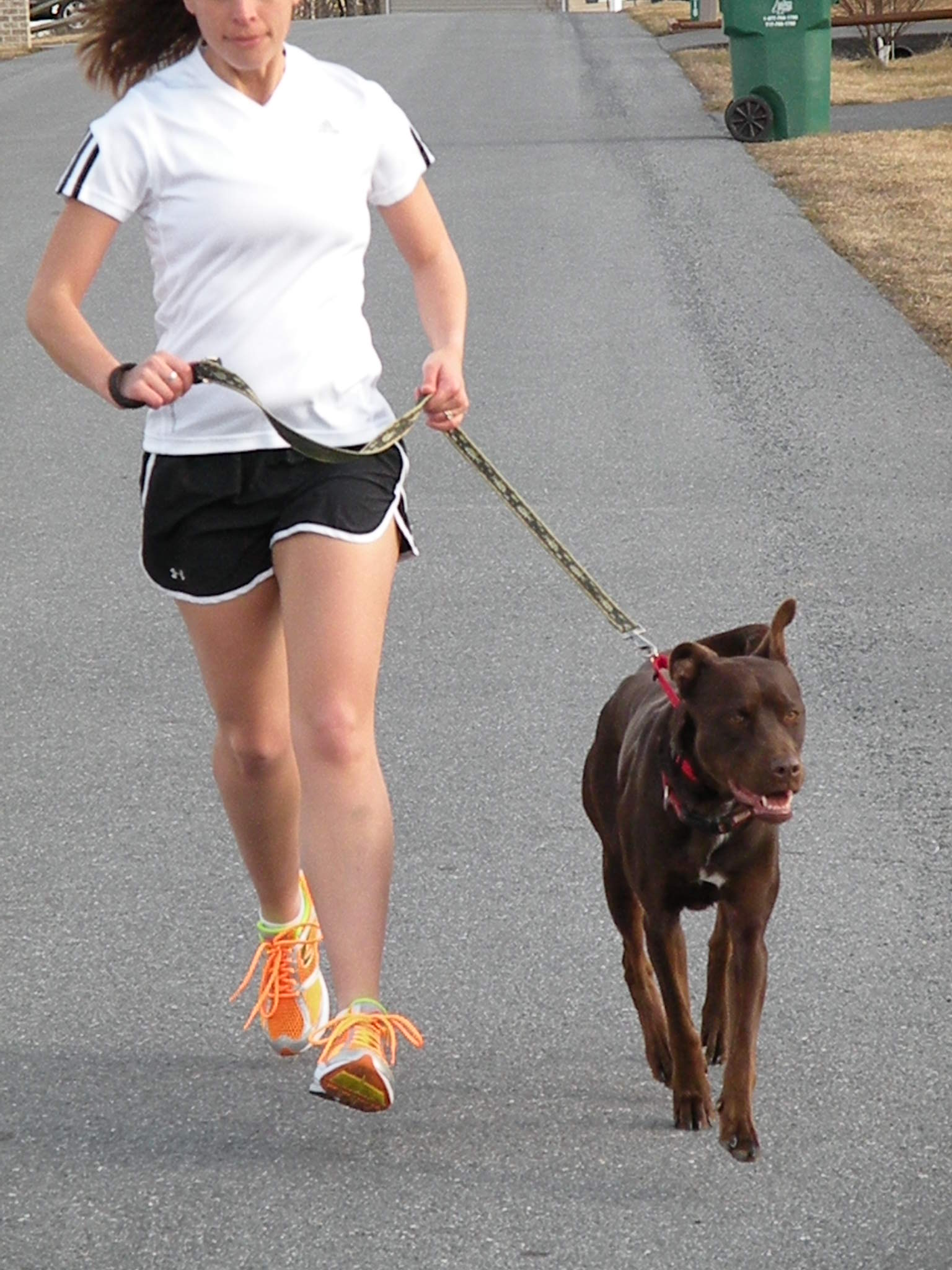
Running with a dog isn’t exactly rocket science but it can be a little frustrating and have a learning curve at first. The good news is it’s very easy to train a dog to run by your side on leash. Most pick it up quickly and will be running in perfect pace with you in no time, often improving their behavior on a leash for both walking and running. Running is a task that forces the dogs to concentrate more than they would on a leisurely stroll. This makes it easier for a higher energy dog to get into a zone while running over walking.
I’ve run and walked many, many dogs over the years and have tried virtually every kind of harness, collar, head collar, leash and waist belt manufactured. Most of these products have their place in the market. However, what I have found works the best for running with the majority of dogs is very simple – a 4 foot lead attached to a Martingale type collar.
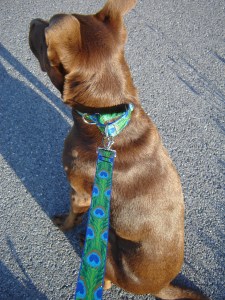
4-Foot Leads
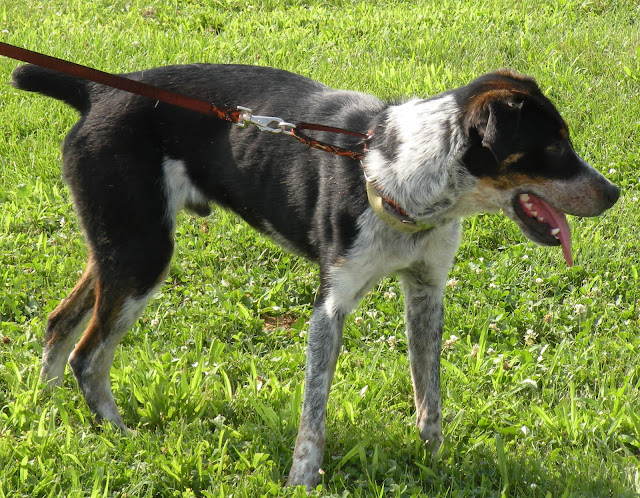
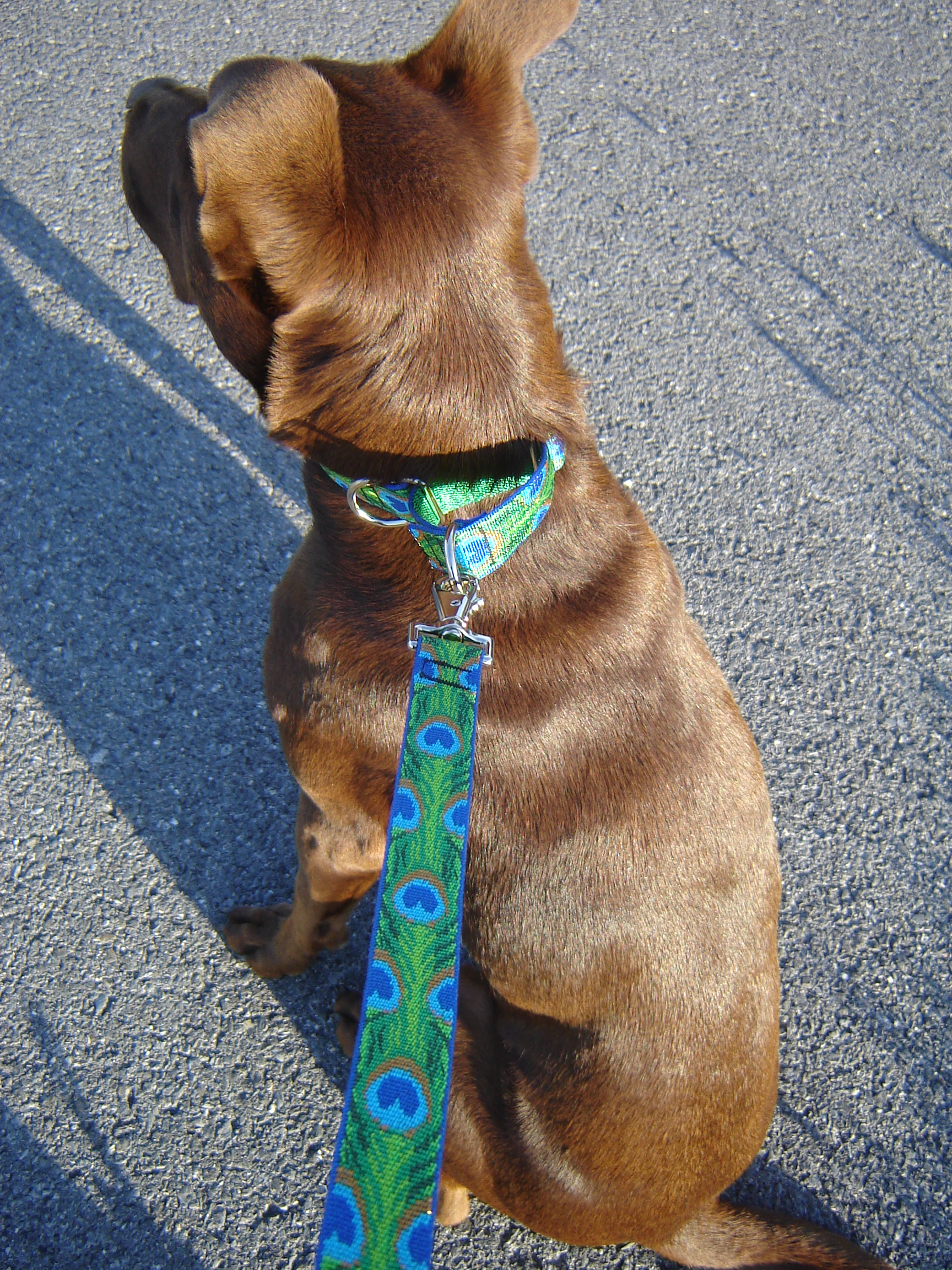
My absolute favorite 4-foot leads are those made by Lupine. I purchased my first one somewhat by accident. I was bringing home another dog and realized I didn’t have enough leashes for all of the dogs in my house. I was at a local store that did not stock a lot of supplies but they had a few Lupine products for sale. I bought a leash and did not even realize that it was a 4-foot lead instead of the more typical 6-foot lead that you’ll find in most stores. It quickly became my absolute favorite leash for a variety of reasons.
First, 4-foot is the perfect length for running. It is short enough that you can keep the dogs by your side and not have too much slack to deal with.

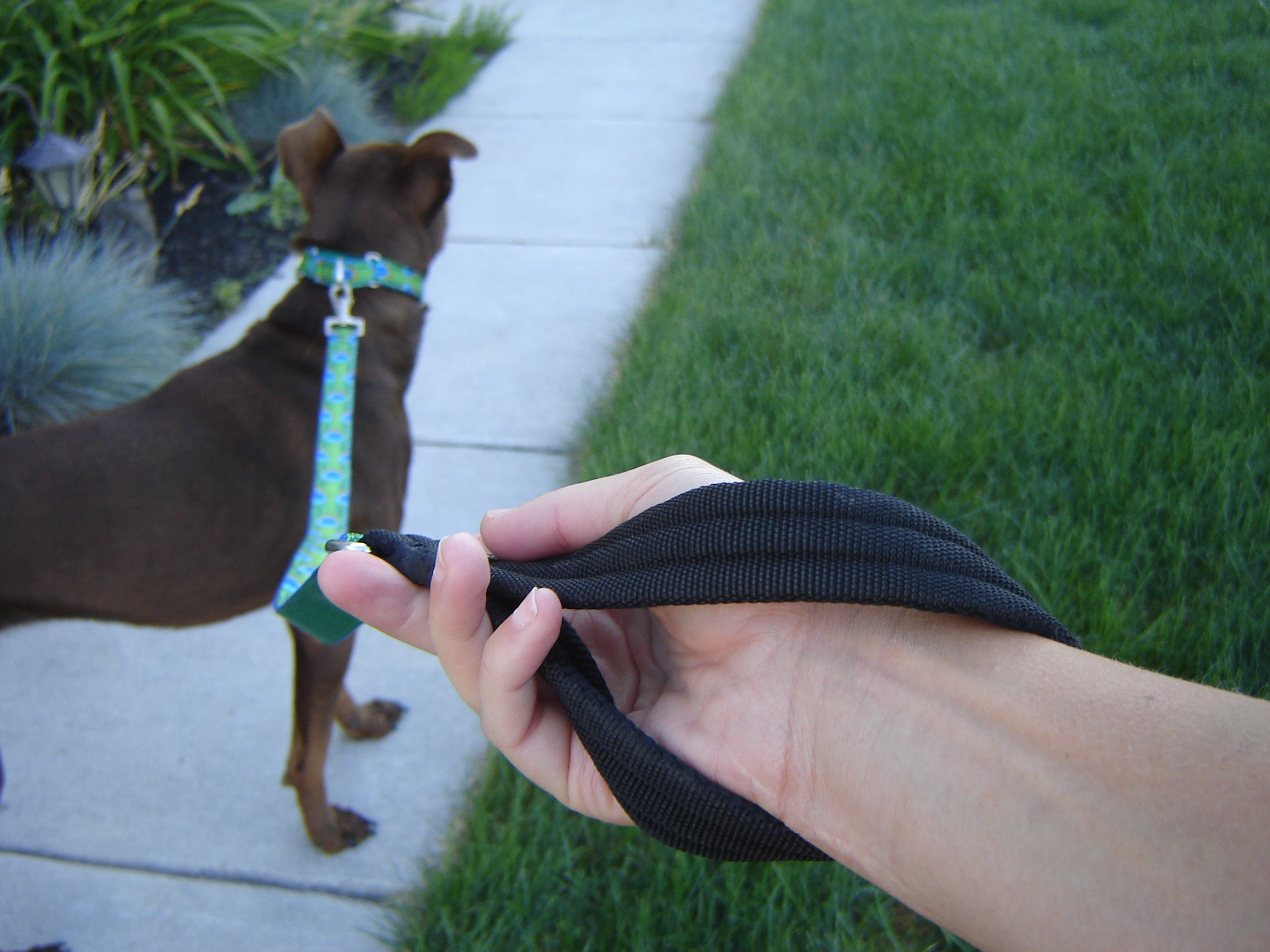
Second, you’ll quickly discover the handle is much better than a standard leash handle. It is slightly padded, fitting perfectly into your hand. Additionally, it is connected to the lead with a metal connector. This allows the handle to stay firmly in your hand while the leash still moves around a bit while you are moving and pumping your arms during running.

Third, the clasp is easy to connect to the collar D-rings. The clasp is much sturdier and lasts longer than other brands.
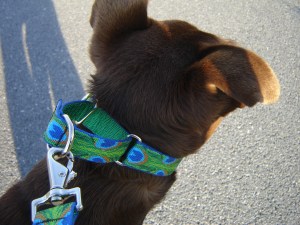
Finally, the nylon holds up very well, even after many, many miles and plenty of rounds in the washing machine. And, as they state, they are guaranteed (even if chewed). A guarantee like that probably means they are pretty high quality!

Well loved lead on the bottom, brand new lead on the top.
Martingale Style Collars
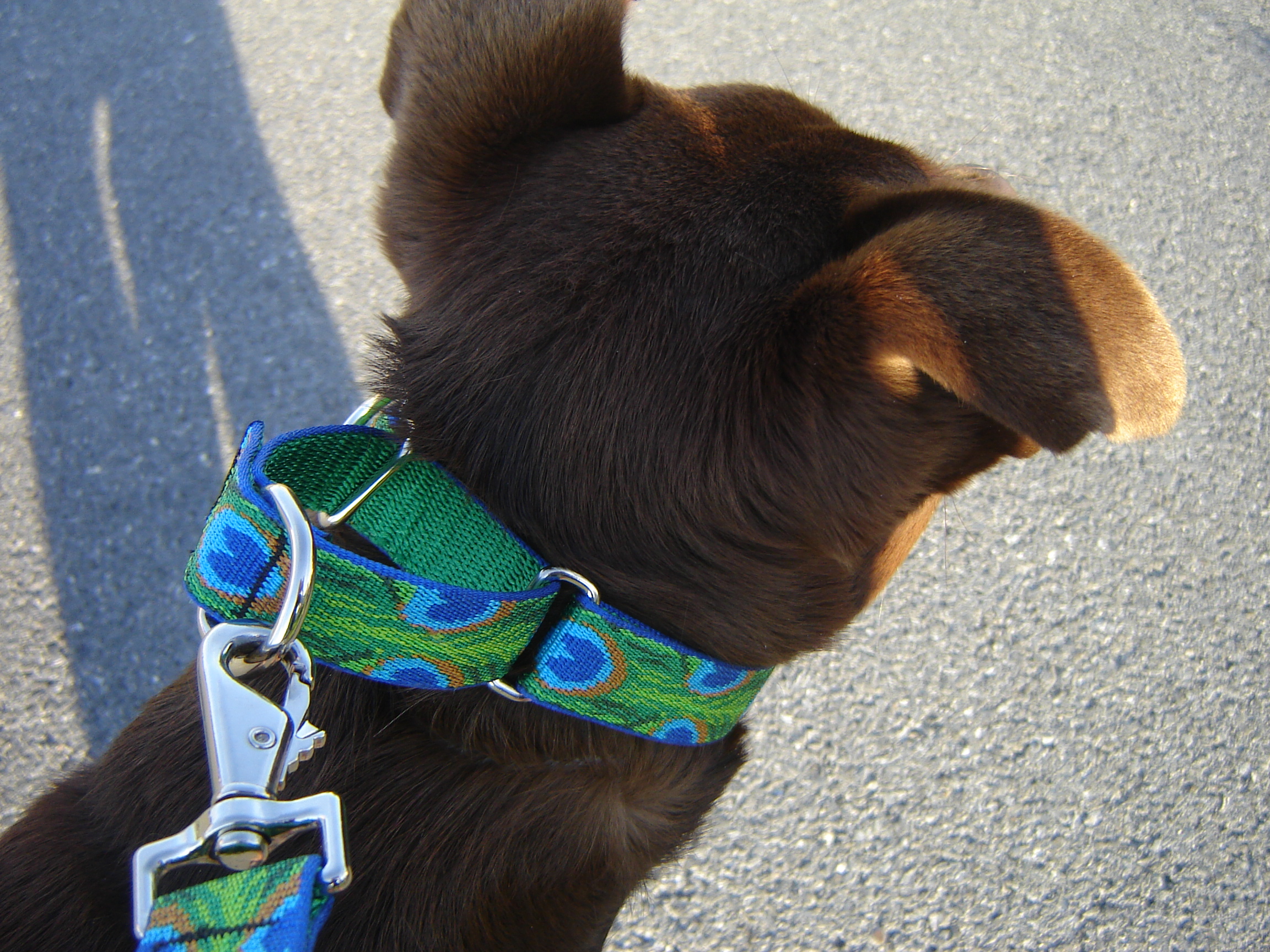
Martingale style collars go by many names but the idea is simple. The loop has a ring which attaches to the lead and tightens if the dog pulls or tries to back out of the collar. They are not restrictive like a choke collar but tighten enough to allow for training the dogs not to pull.
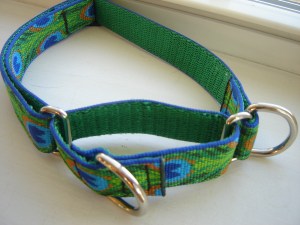
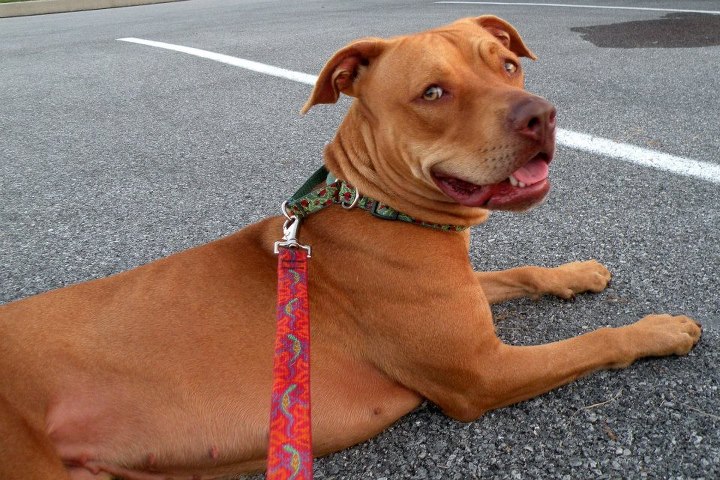
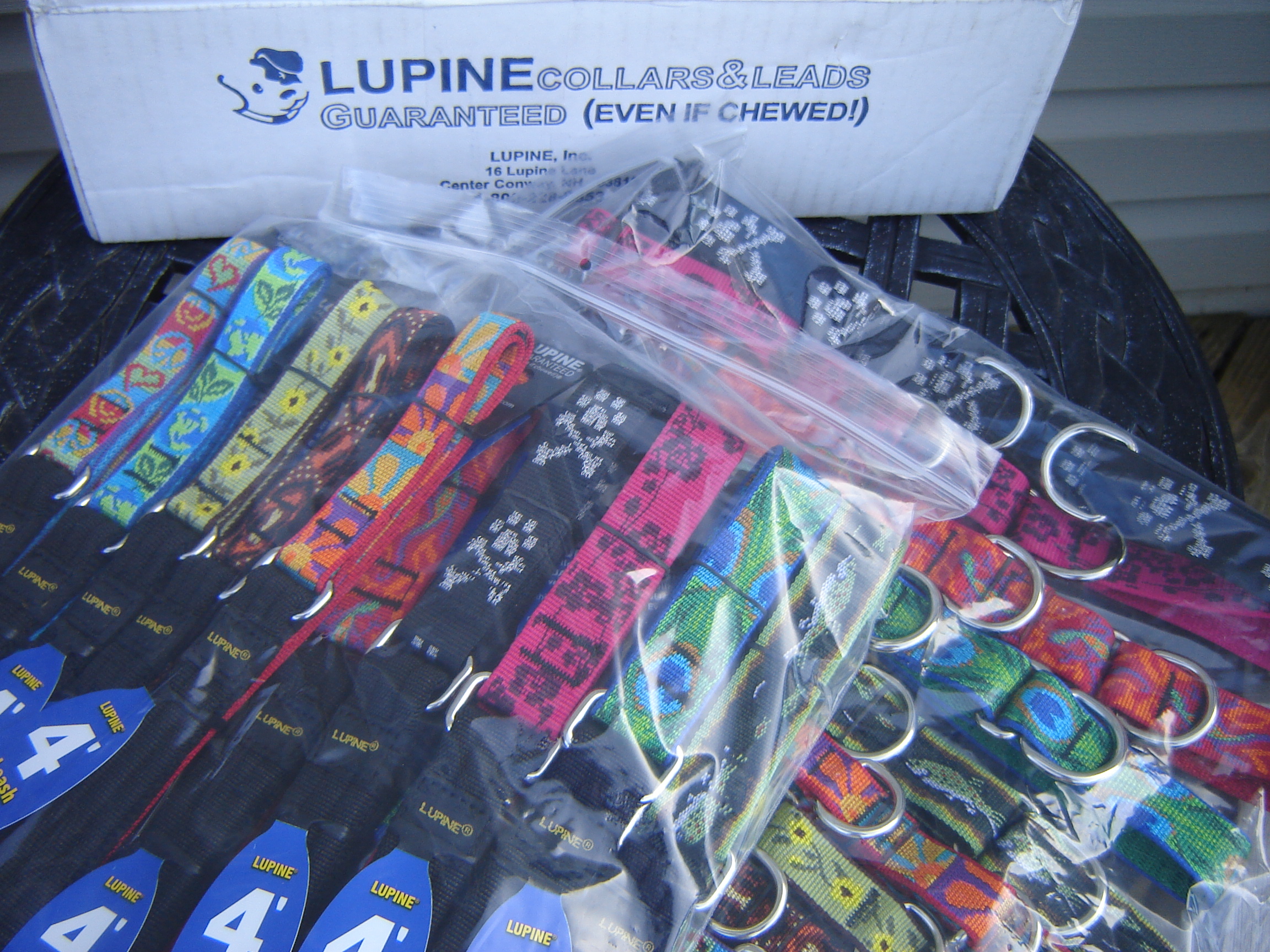
Lupine makes a Combo collar which can be used as a training type collar (D-ring in the front of picture) or a regular collar (D-ring on the right). For running, I always use the martingale loop. It should be noted that these types of collars should not be left on dogs unattended due to the tightening feature of the looped section.
The Lupine collars are high quality just like the leads. The only drawback with this style of collar is it is an over the head type. This makes it a little more difficult to fit on the animal shelter dogs as opposed to those that also have a buckle. The shelter dogs are usually quite excited and not overly patient to wait on the human’s ability to re-size the collar a couple of times before getting it right!
This type of collar is the only type that I’ve never had a dog be able to get out of in some way. With virtually all other types of collars or harnesses, dogs who really want to try to get away from you to chase something usually can but I’ve never had it happen with this type of collar. This is particularly important when running with the shelter dogs since they sometimes get spooked by something and try to get away.
Starting the Run
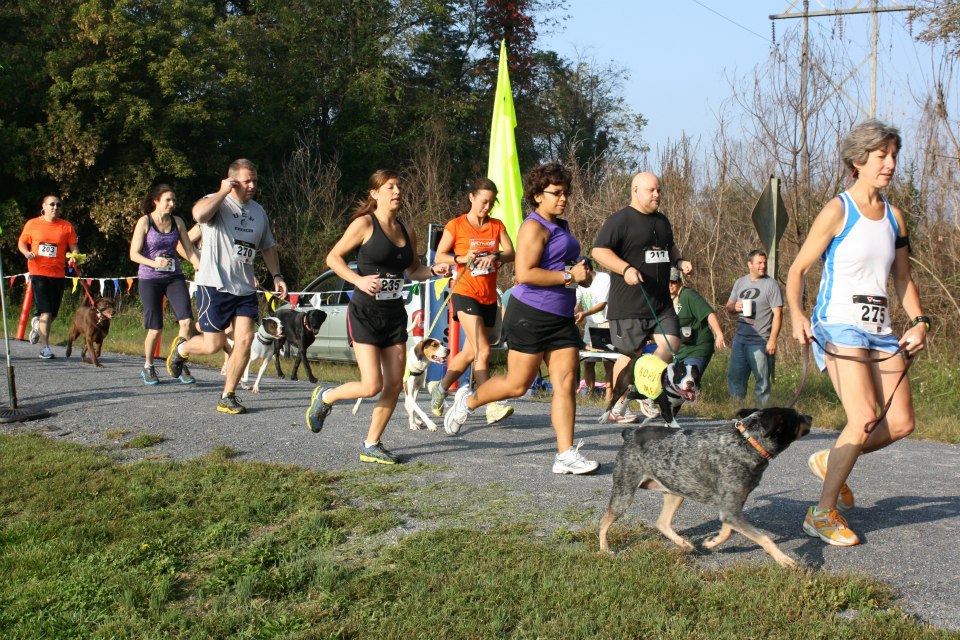
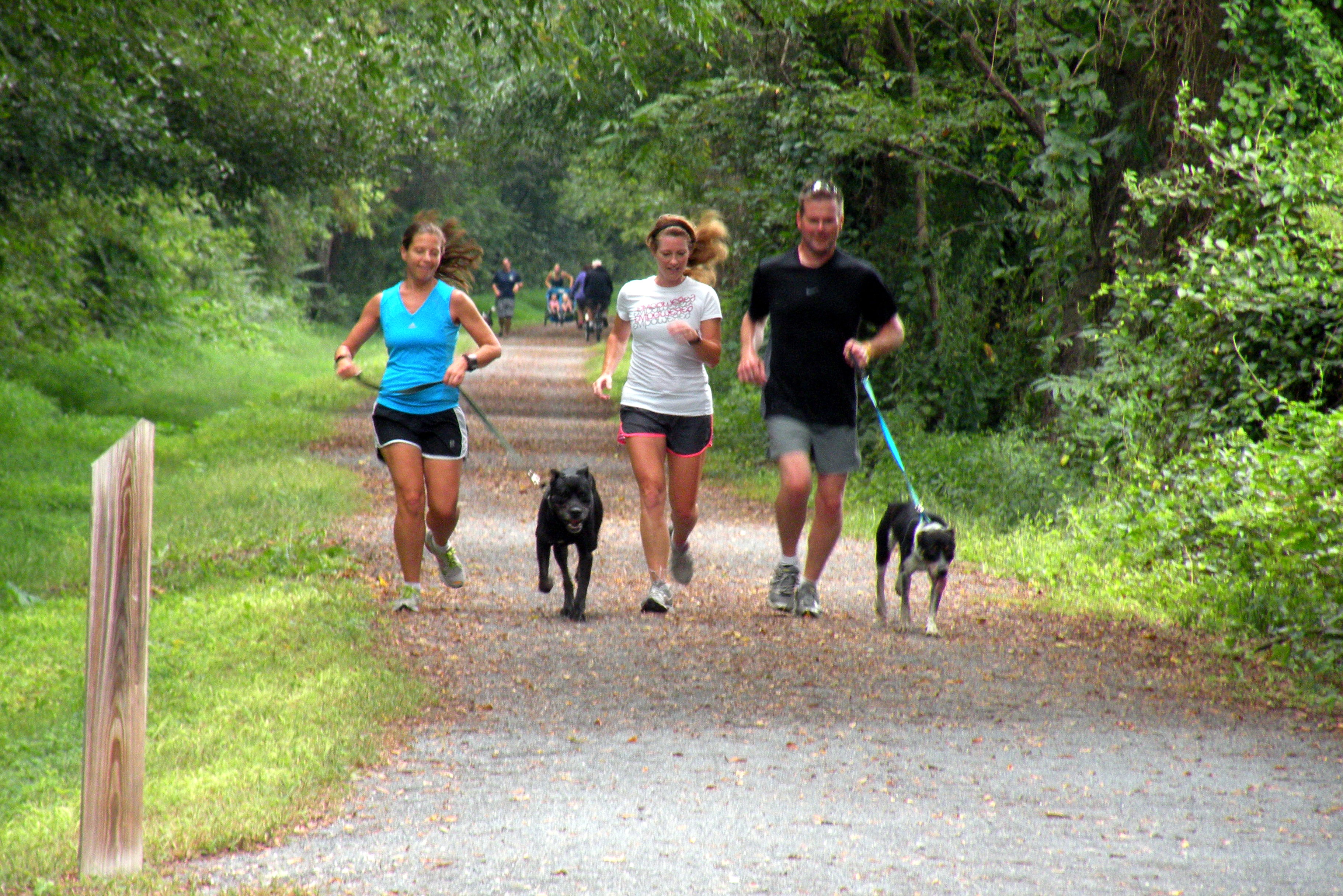
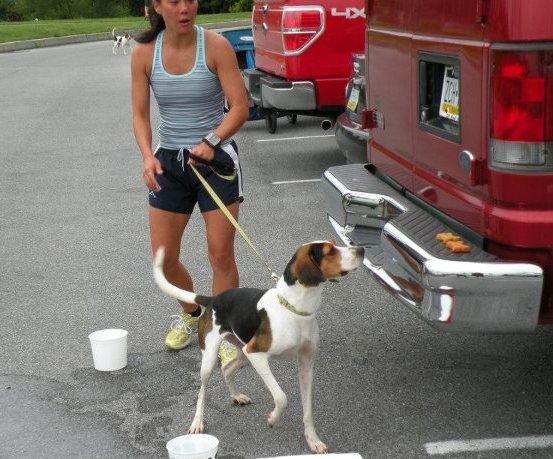
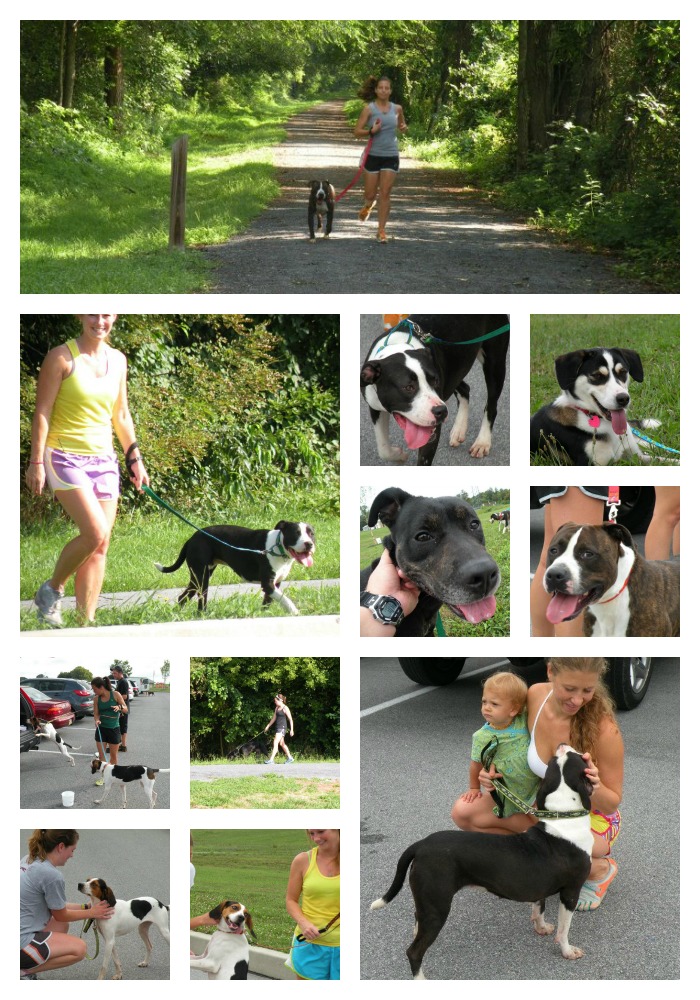
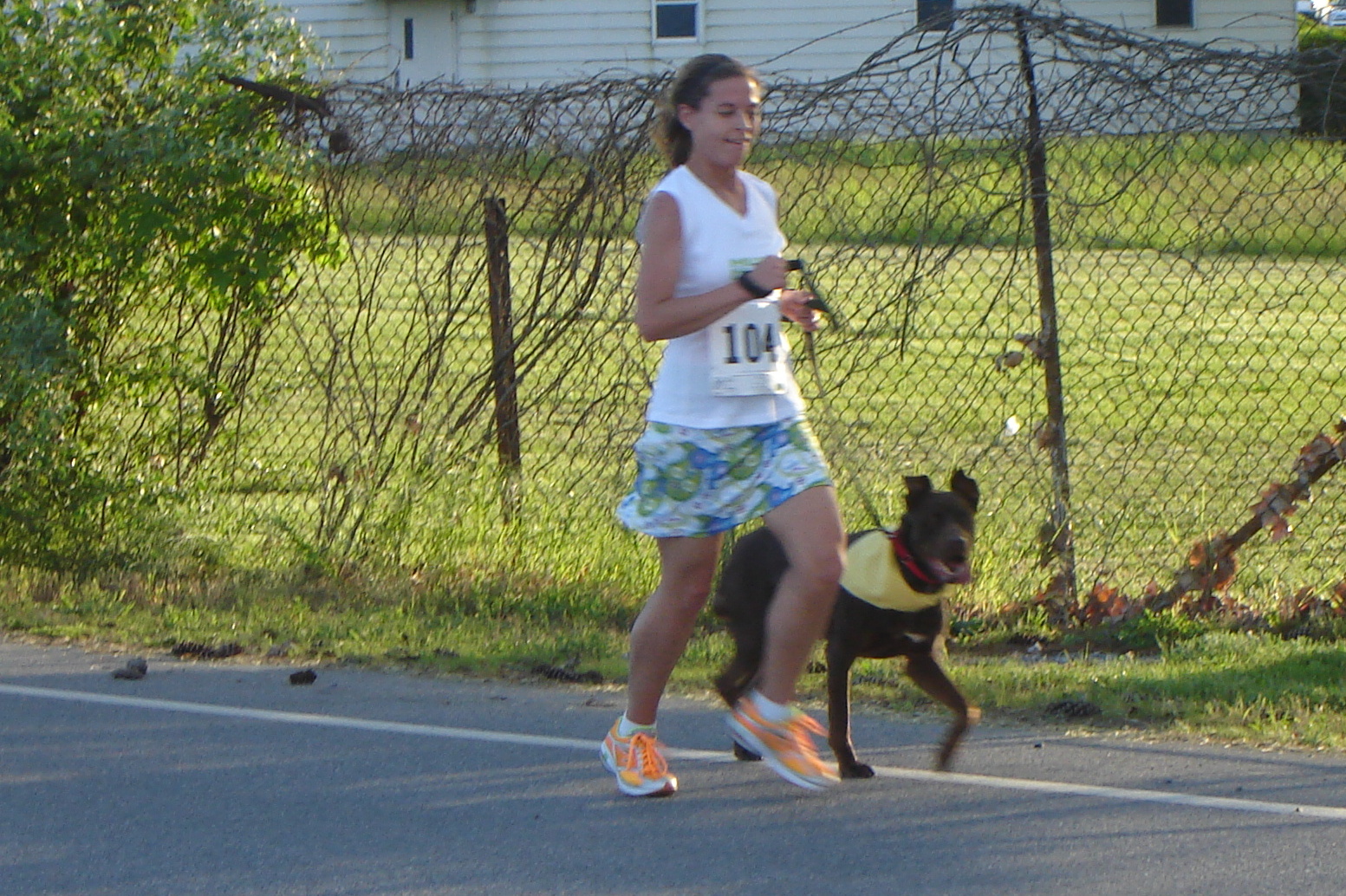
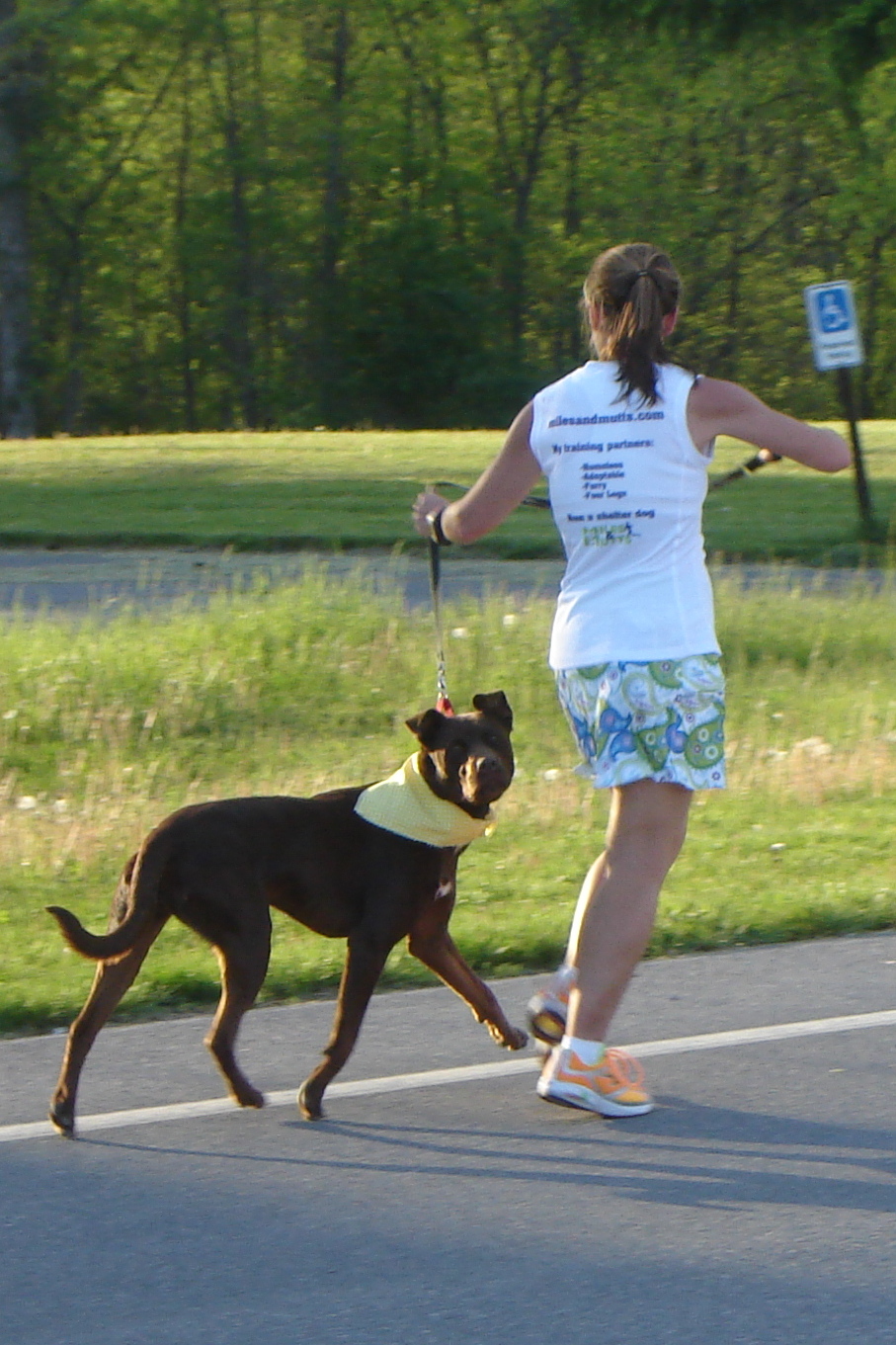
To start running with a shelter dog, I slowly move into a jog. For the first quarter of a mile or so, I let the dogs go in which direction they want which often includes some zig-zagging. If running with my own dogs, I discourage the zig-zagging and start them directly on my left side. After the dogs start to figure out what we are doing, I begin to reel them in to my side. To do so, I grip the lead about halfway down to encourage staying on my left. Usually, they’ll fall into pace after practicing a few times and you can run with a slack lead.

If the dog gets distracted, usually it is easy to pull up on the leash and collar to redirect the dog straight ahead.
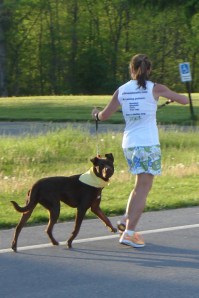
With a little experience on the dog’s part and a little patience on the human’s part, you’ll be running together harmoniously in no time.
Miles and Mutts has been using Lupine leads and Martingale style collars to run with the dogs. Often, we were scrounging for enough supplies to make due for the day when multiple dogs were involved.
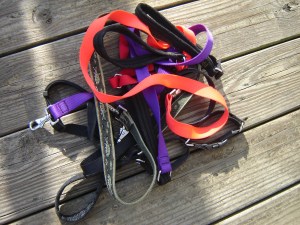
My previous stash that I guarded closely!
After contacting Lupine and talking with their incredible customer support, Miles and Mutts runners now has the appropriate collars and leads in the correct sizes. Thank you Lupine!

Interested in running, join us!




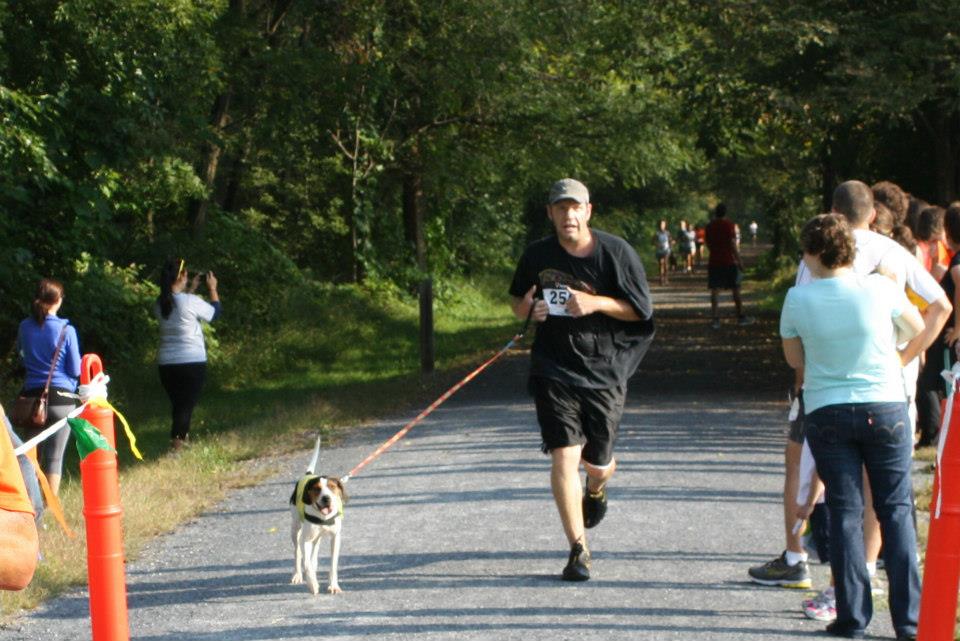
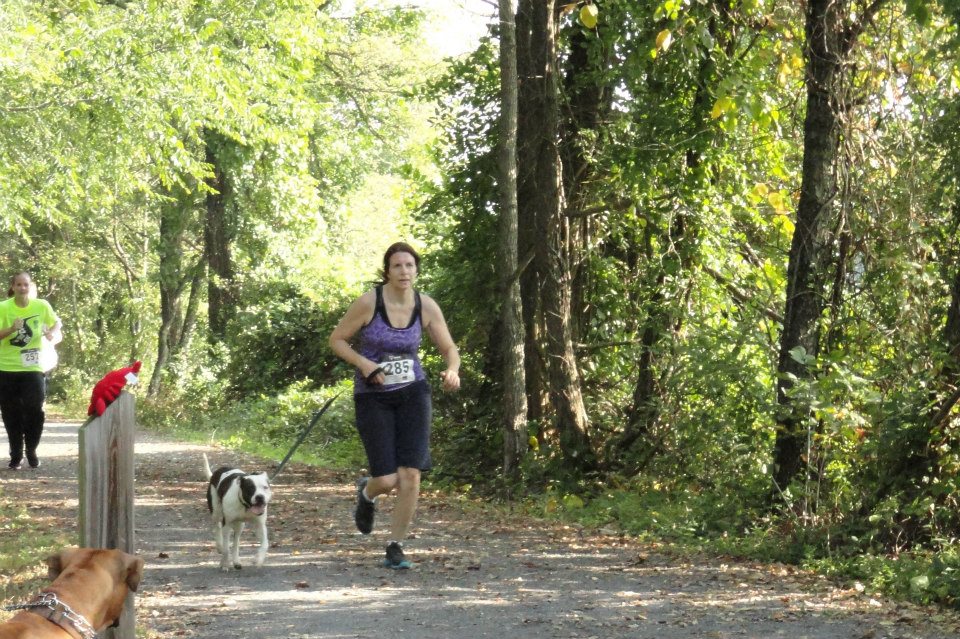
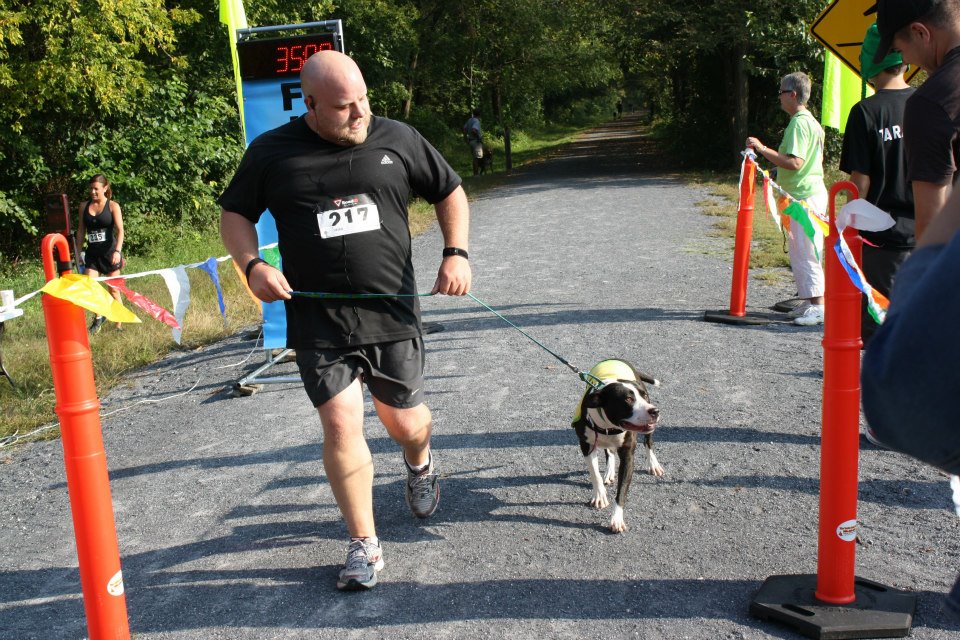
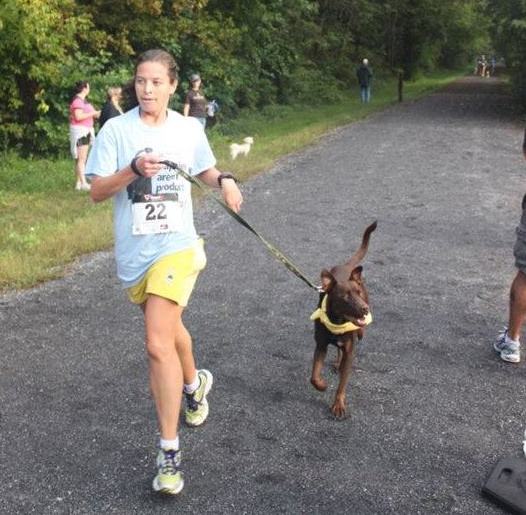












 Miles & Mutts